Understanding
Community Change.

"Through extensive probes and observations, a clear pattern emerged: older residents genuinely want more social interaction, yet they resist change."

Research Co-Creation Social Design Cultural Probes

Researching social connection in a shifting community.

Through extensive probes and observations, a clear pattern emerged: older residents genuinely want more social interaction, yet they resist change. A co-creation session revealed how deeply these desires run and illuminated the barriers preventing them from initiating connections independently.

When a 65-plus designation disappears.

Talis's Aubadestraat residential complex in Nijmegen recently removed its 65-plus designation. As elderly residents depart, younger and international tenants arrive. The older community members deeply miss their former sense of belonging and actively seek meaningful connections with newcomers.

Going deeper than surveys ever could.

Needs and desires.

When participants actively contribute and share perspectives, researchers gain nuanced understanding of authentic needs, core values, and genuine aspirations that drive behavior.

Depth.

Unlike structured surveys or interviews that remain surface-level, co-creation enables open exploration through deeper dialogue. This approach uncovers hidden insights and emotional truths that conventional methods miss.

A session that revealed what no one wanted to say out loud.

The session began by presenting findings from an earlier cultural probe. Interestingly, residents had already examined these results independently — demonstrating both their curiosity and willingness to occasionally bend ethical boundaries to satisfy it.

Discussion quickly revealed why some residents avoid the communal space while others participate regularly. A striking discovery emerged: non-participants are perceived negatively by active community members. The level of mutual distrust proved substantial.
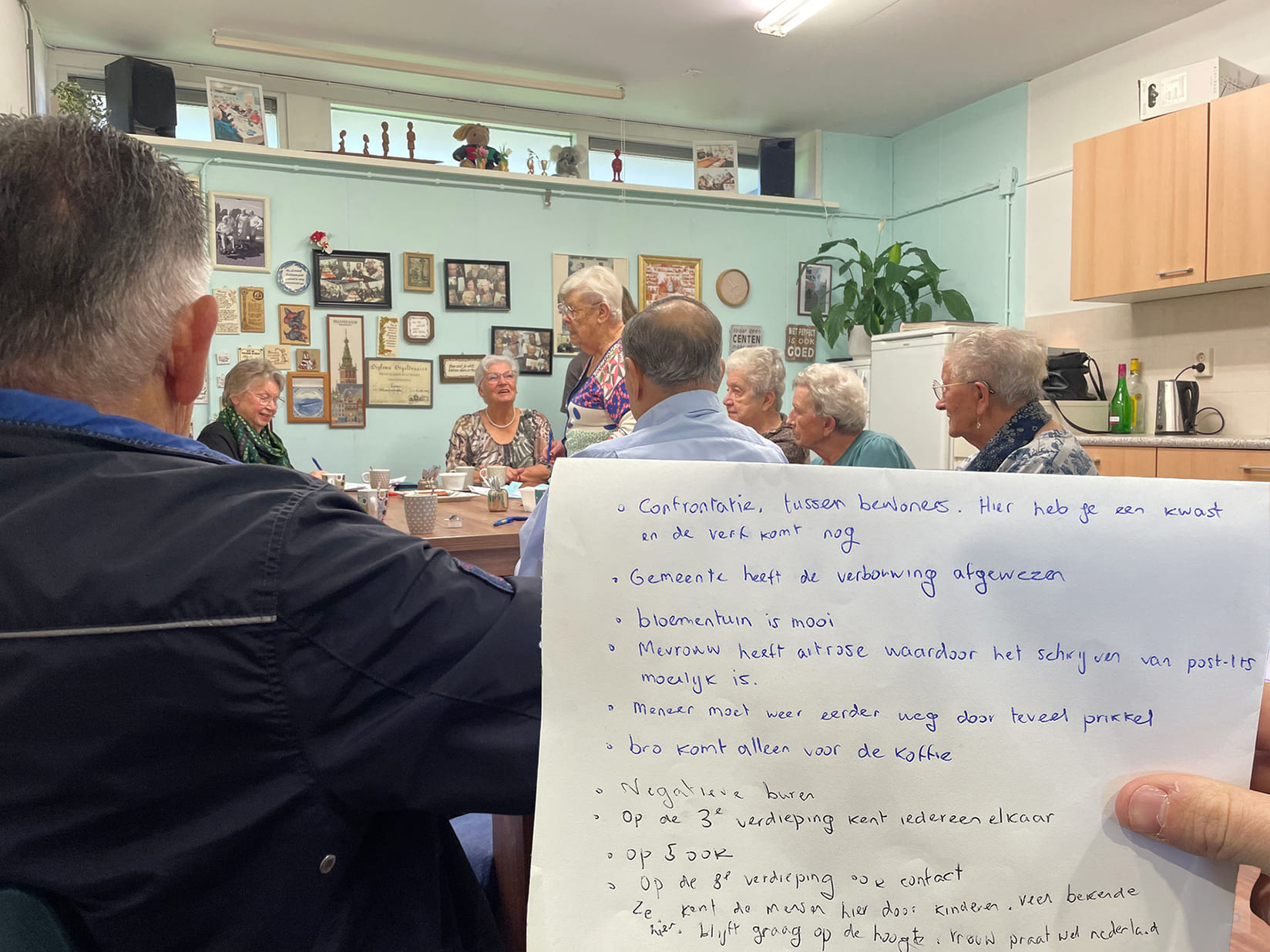
Observation session with residents at Talis Aubadestraat Observation session — residents discussing social dynamics at De Aubade
Constructive voices persist.

Several residents remain unaffected by negativity and propose constructive solutions — such as showcasing positive testimonials at the building entrance to emphasize what makes the communal area welcoming. Nevertheless, underlying tensions persist.

Hidden tensions surface.

One resident who occasionally participates recalled receiving a paintbrush with the comment, "The paint will come later," which, though meant humorously, felt pointed. This illustrates how offhand negative remarks continue affecting residents and may fuel group divisions.

"The paint will come later" — a seemingly harmless joke that revealed deeper tensions.

Understanding how residents move through the building.

To explore these dynamics more thoroughly, individual residents were visited to understand where they live, how they relate to neighbours, which routes they navigate through the building, and where they typically encounter others — insights potentially valuable for future design interventions.

1. Discussion board activity.

Residents identified what they appreciate about the complex through guided conversation, successfully shifting away from earlier negative thinking patterns.

2. Positive reflection.

They engaged in pleasant dialogue about previously organized activities and the meaningful experiences gained from participating together.

3. Community reconnection.

The exercise helped residents rediscover shared positive memories and common ground, building bridges across perceived divisions.

Neighbourhood value map.

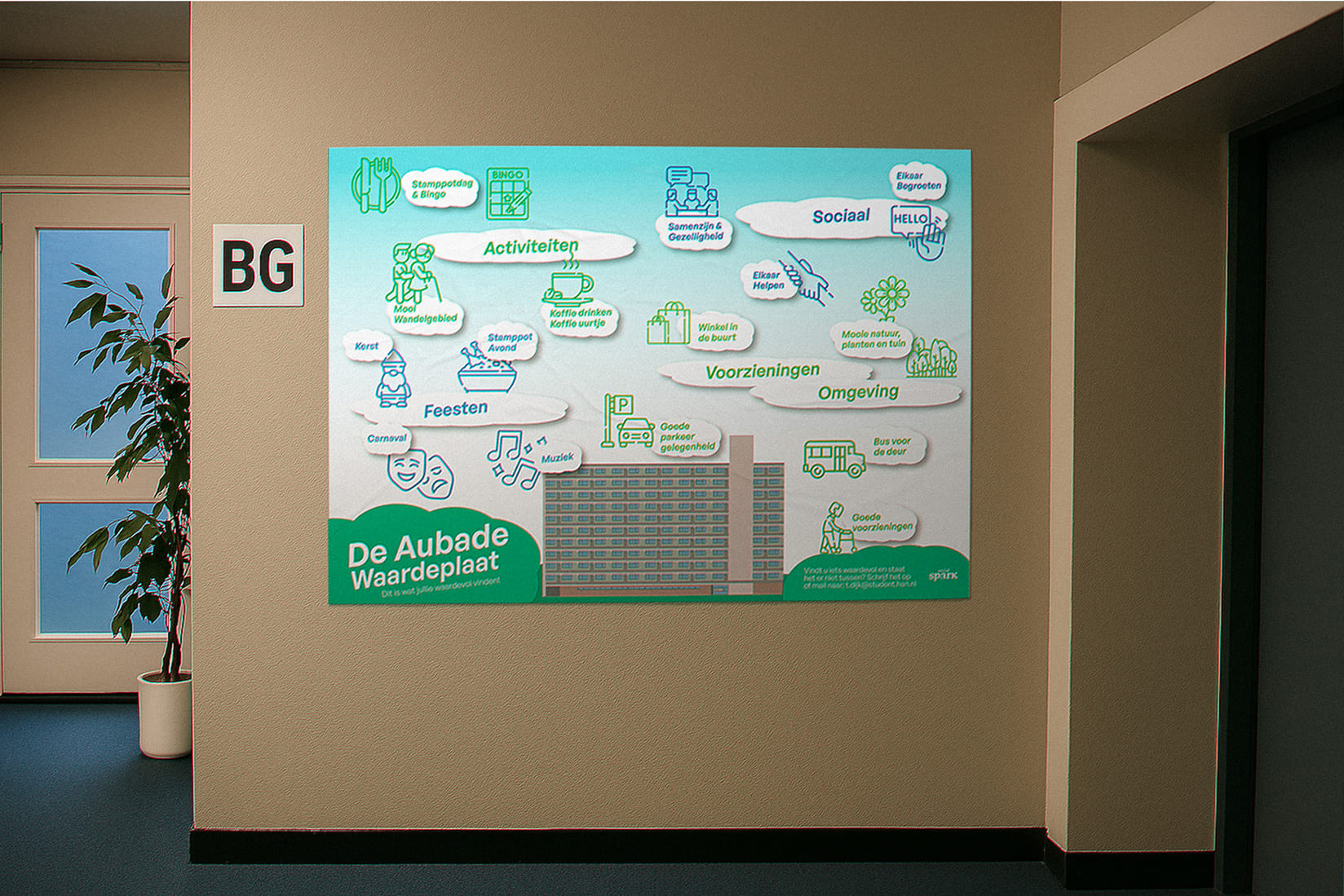
Session findings were transformed into a comprehensive neighbourhood value map. This tool serves as an excellent complement to an earlier co-creation idea: displaying positive feedback at the building entrance.

The impact is immediate. Anyone entering the building can instantly recognise the value and strength of the community within the complex, creating a welcoming atmosphere that counters negative perceptions and encourages connection.

De Aubade Waardeplaat — Neighbourhood Value Map displayed in the building entrance De Aubade Waardeplaat — displayed at the building entrance

Visual representation of community values at entry points can shift perceptions and foster inclusive belonging among diverse resident groups.

Next project

Erfgoed Gelderland